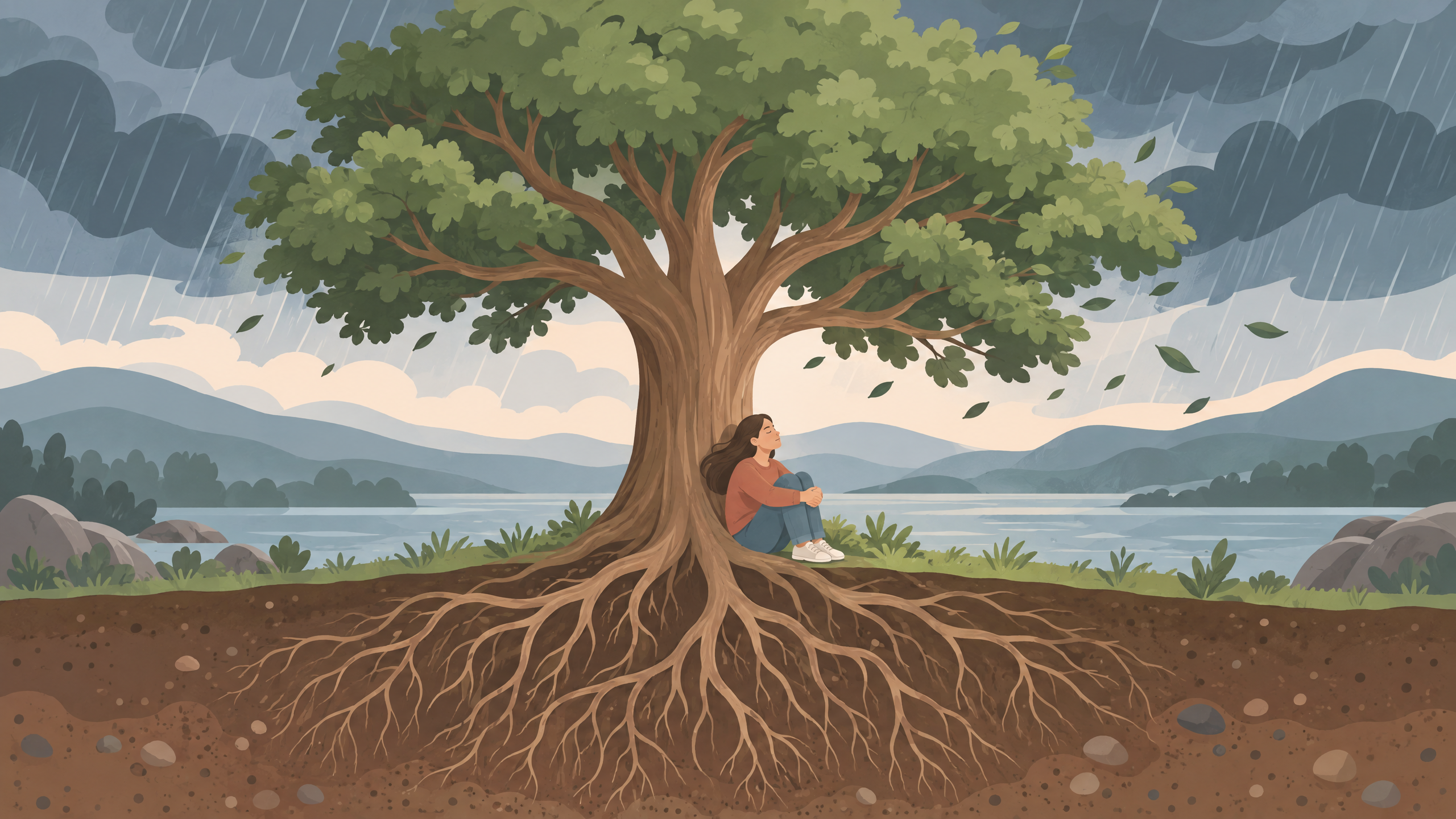
Life doesn’t ask permission before throwing difficulties at you. Job losses, relationship strain, health scares, financial stress, grief — these aren’t edge cases. They’re features of a full human life. What separates people who navigate these challenges with relative stability from those who get derailed isn’t the absence of adversity. It’s resilience.
Emotional resilience is the capacity to adapt to stress, setbacks, and challenges without being permanently destabilized. It doesn’t mean you won’t feel pain — it means you recover faster, learn from difficulty, and maintain a sense of self through hard times.
The good news: resilience isn’t a fixed trait you either have or don’t. Research in positive psychology consistently shows it’s a skill set — one that can be learned, practiced, and strengthened over time.
What Resilience Actually Is (and Isn’t)
Resilience is often misunderstood as toughness — stoicism, not letting things affect you, pushing through without complaint. This is wrong, and actually counterproductive.
Genuine resilience involves fully acknowledging difficult emotions rather than suppressing them. Research by psychologist Susan David shows that emotional suppression (“toxic positivity”) is associated with worse mental health outcomes, not better. Resilient people feel their emotions — they just don’t get swallowed by them.
Think of resilience less as a wall and more as a flexible branch: it bends under pressure rather than snapping.
The Core Pillars of Emotional Resilience
Build a Sense of Meaning and Purpose
People who have a clear sense of why they’re doing what they’re doing recover from adversity faster. This finding runs through Viktor Frankl’s work on meaning-making in extreme circumstances, through modern positive psychology research on purpose and wellbeing.
You don’t need a grand life mission. Even small senses of meaning — being a good parent, contributing to your community, growing a skill you care about — provide a psychological anchor when things get hard.
Ask yourself: what genuinely matters to you, independent of circumstance? This question is worth spending real time on.
Develop Cognitive Flexibility
Cognitive flexibility is the ability to examine a situation from multiple angles — to hold different interpretations rather than locking into one (usually the worst one).
When something difficult happens, our minds often catastrophize or personalize (“This always happens to me,” “I’m terrible at this”). Cognitive behavioral therapy, one of the most evidence-supported psychological treatments, is built around identifying and questioning these thought patterns.
A simple practice: when you notice a distressing automatic thought, ask “Is this the only possible interpretation? What would I tell a good friend thinking this?” This creates distance from the thought and opens up other ways of seeing the situation.
Maintain Strong Social Connections
The research on social support and resilience is one of the most consistent findings in psychology. People with strong social networks — even small ones — recover from adversity significantly faster than those who are socially isolated.
This isn’t about having many friends. It’s about having at least a few relationships where you feel seen, heard, and supported. Investing in those relationships before you need them — reaching out, showing up, being present — is one of the most resilient things you can do.
Regulate Your Nervous System
Emotional resilience isn’t just psychological — it has a strong physiological component. Chronic stress dysregulates the autonomic nervous system, making emotional recovery harder. Building a regulated nervous system requires consistent basic practices:
- Quality sleep (see our guide on sleep hygiene)
- Regular physical movement
- Mindfulness or breathwork practices that activate the parasympathetic nervous system
- Reducing stimulant use and screen time that keep the nervous system activated
When your baseline physiological state is calmer, difficult emotions are less overwhelming and pass more quickly.
Practice Self-Compassion, Not Self-Criticism
Kristin Neff’s research on self-compassion shows that treating yourself with the same kindness you’d offer a friend facing hardship — rather than harsh self-criticism — is strongly associated with greater resilience and faster recovery from setbacks.
Counterintuitively, self-criticism feels productive but typically makes recovery harder. Self-compassion doesn’t mean making excuses. It means acknowledging difficulty without adding a layer of shame on top of it.
Small Daily Practices That Build Resilience Over Time
Resilience is built through small, consistent actions more than dramatic gestures. A few that research supports:
Reflection journaling: Writing for 10–15 minutes about a difficult experience — what happened, how you felt, what you learned — accelerates emotional processing. James Pennebaker’s research shows expressive writing improves both psychological and physical health.
Gratitude practice: Not toxic positivity, but genuinely noticing what’s working. Three specific things per day (not generic ones) shifts attention patterns toward the positive over time.
Intentional exposure to small stressors: Doing things that are slightly uncomfortable — cold showers, difficult conversations, physical challenges — builds confidence in your ability to handle discomfort, which generalizes to bigger challenges.
When Professional Support Makes Sense
Building resilience is not the same as white-knuckling it alone. If you’re struggling with ongoing anxiety, depression, trauma, or grief, working with a therapist isn’t weakness — it’s the most direct route to building the skills outlined here with proper support.
For more on the mental wellness toolkit, explore our guides on mindfulness meditation and work-life balance. Resilience isn’t built in a single moment of strength — it’s built across thousands of small ones.