Stress is unavoidable — but chronic, unmanaged stress is not something you simply have to live with. The key difference between people who seem to handle pressure well and those who burn out isn’t that they have less stress. It’s that they have better tools for managing it.
The techniques in this guide are built for real life — for people with full schedules, competing demands, and not a lot of spare time. No two-hour meditation sessions required.
Understanding What Stress Actually Does to Your Body
Before diving into solutions, it helps to understand the problem. When you experience stress, your body releases cortisol and adrenaline. This is the fight-or-flight response — useful in a real emergency, but destructive when it fires constantly in response to emails, traffic, and deadlines.
Chronic stress contributes to high blood pressure, weakened immunity, sleep problems, weight gain, and increased risk of depression and anxiety. It’s not just “being stressed out” — it’s a serious health concern that deserves serious attention.
Proven Stress Management Techniques
Box Breathing
This technique is used by Navy SEALs and emergency room doctors for good reason — it works fast. Inhale for 4 counts, hold for 4, exhale for 4, hold for 4. Repeat for 2–3 minutes. It directly activates your parasympathetic nervous system, counteracting the stress response almost immediately.
The 5-4-3-2-1 Grounding Method
When stress spikes into anxiety, grounding techniques pull your mind back to the present. Name 5 things you can see, 4 you can touch, 3 you can hear, 2 you can smell, 1 you can taste. This interrupts the stress spiral by engaging your senses rather than your spiraling thoughts.
Time Blocking and Priority Stacking
A lot of stress comes not from what you’re doing but from the fear of forgetting everything you need to do. Time blocking — assigning specific tasks to specific time slots — reduces the mental load of constantly wondering “what should I be doing right now?” The Eisenhower Matrix (urgent vs. important) helps you decide what actually deserves your energy.
Strategic Movement Breaks
Sitting for long periods amplifies stress hormones. A five-minute walk every 90 minutes isn’t just good for your body — it clears mental fog and resets your stress response. Set a timer. Make it non-negotiable.
The Two-Minute Journaling Practice
At the end of each day, write down three things that went well and one thing you’re worried about. The positives rewire your brain toward a more balanced perspective (this is the basis of positive psychology). Writing the worry down gives it a “home” outside your head, reducing the rumination that keeps stress alive at night.
Saying No — Without Guilt
Overcommitment is one of the leading causes of chronic stress. Saying no to things that aren’t aligned with your priorities isn’t selfish — it’s essential. Practice the phrase: “I can’t take that on right now, but thank you for thinking of me.” You don’t owe anyone an elaborate excuse.
Progressive Muscle Relaxation
Tense and release each muscle group, starting from your feet and moving up to your face. This takes about 10 minutes and has strong evidence behind it for reducing physical tension that accumulates throughout the day. It’s especially effective before sleep.
Building a Personal Stress Management System
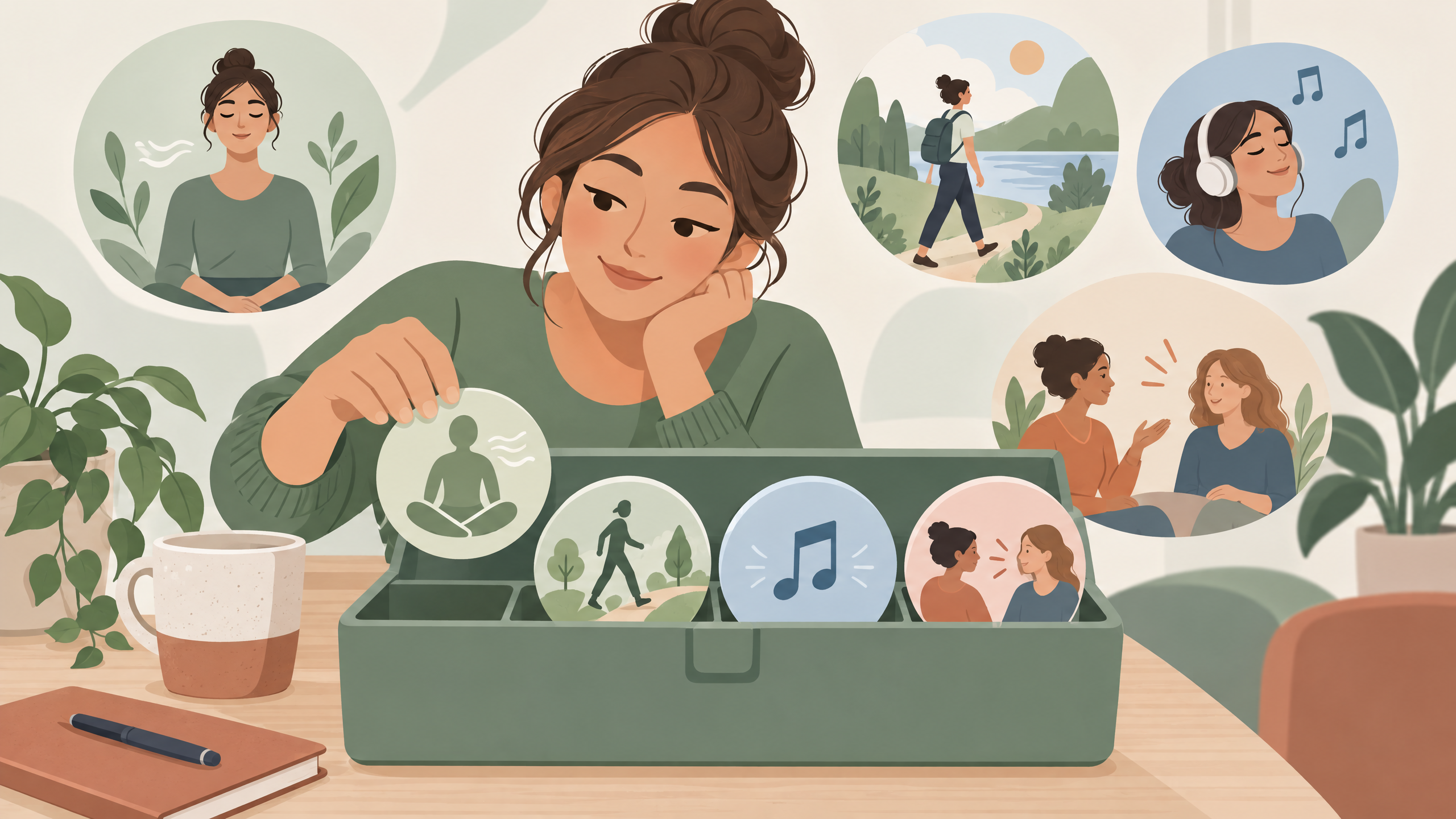
No single technique works for everyone in every situation. The goal is to build a personal toolkit — a handful of strategies you can deploy quickly depending on the type of stress you’re facing.
Acute stress (a heated meeting, a tight deadline): Use box breathing or grounding.
Chronic background stress (ongoing workload, relationship tension): Use journaling, time blocking, and scheduled movement.
End-of-day decompression: Progressive muscle relaxation, light exercise, social connection.
When Stress Needs Professional Help
If your stress is persistent, significantly affecting your relationships or work performance, or has started to feel like something you can’t manage, please talk to a mental health professional. Therapy — especially cognitive behavioral therapy (CBT) — has strong evidence for treating stress and anxiety disorders.
You can also explore our related articles on how to improve your mental health daily and understanding work-life balance for more support.
Managing stress isn’t about eliminating it — it’s about responding to it better. These tools can help you get there.