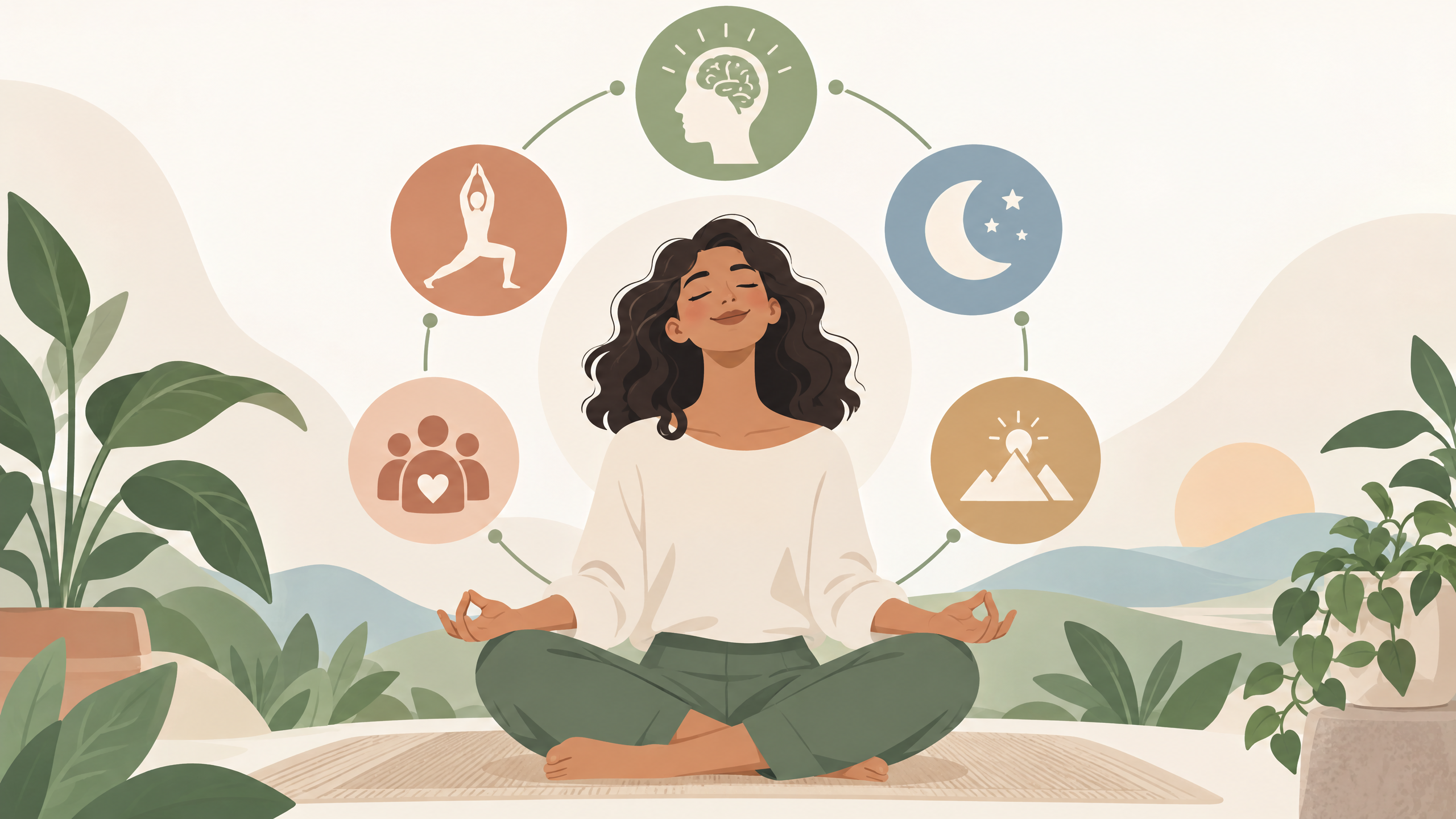
Wellbeing is one of those words that gets used constantly but rarely explained properly. We hear it in health campaigns, HR emails, and self-help books — but what does it actually mean? And more importantly, why does it matter for your day-to-day life?
A Clear Definition of Wellbeing
Wellbeing refers to the state of being comfortable, healthy, and happy across multiple dimensions of life — not just physically, but emotionally, socially, financially, and in terms of meaning and purpose.
The World Health Organisation defines health as “a state of complete physical, mental and social well-being and not merely the absence of disease or infirmity.” That phrasing matters: wellbeing is not simply the absence of illness. It is the presence of something positive.
Psychologists often distinguish between two types of wellbeing:
- Hedonic wellbeing — feeling good, experiencing pleasure, and avoiding pain. This is the “happiness” most people think of when they hear the word wellbeing.
- Eudaimonic wellbeing — living a meaningful, purposeful life. This is deeper than moment-to-moment pleasure. It includes a sense of personal growth, connection to others, and feeling your life contributes to something larger than yourself.
Research consistently shows that people who score high on eudaimonic wellbeing tend to live longer, have stronger immune systems, and recover from setbacks faster than those who prioritise hedonic pleasure alone.
What Wellbeing Looks Like in Real Life
Wellbeing is easier to recognise in practice than it is to define abstractly. Here are some examples across different dimensions:
Emotional: You have days where things go wrong — a difficult meeting, a frustrating conversation — but you recover relatively quickly. You don’t spiral. You feel capable of handling what life throws at you, even if it’s hard.
Social: You have at least a few relationships where you feel genuinely seen. You don’t feel persistently lonely, even on hard days. You can ask for help when you need it.
Physical: You have enough energy to get through your day. You sleep reasonably well most nights. Your body doesn’t feel like an obstacle.
Occupational: Your work feels at least somewhat meaningful, even if it’s not perfect. You don’t dread every Monday with a sense of dread so heavy it ruins Sunday afternoon.
Financial: You’re not in constant anxiety about money. You have some sense of control, even if you’re not wealthy. Financial stress doesn’t dominate every decision you make.
Wellbeing Is Not the Same as Happiness
This is a crucial distinction. Happiness is a feeling — and feelings are temporary. You can have high wellbeing on a day when you’re not particularly happy: when you’re working through something difficult, caring for someone you love, or doing challenging work you believe in.
Equally, you can feel happy in the short term while your wellbeing is actually declining — scrolling social media for hours, drinking too much at weekends, or saying yes to everything to avoid discomfort.
Wellbeing is a more stable, structural thing. It’s the foundation from which happiness can grow — but it’s not the same thing.
Why Wellbeing Matters
The research on this is extensive and consistent:
- Higher wellbeing is associated with lower rates of depression, anxiety, and physical illness
- People with high wellbeing are more productive at work and have lower absenteeism
- Strong social wellbeing is one of the most powerful predictors of longevity — more so than many physical health factors
- Wellbeing in childhood predicts better adult outcomes across education, income, relationships, and health
In short, your wellbeing isn’t just about how you feel today. It shapes virtually every other outcome in your life.
How to Start Improving Yours
You don’t need to overhaul your life. Start by identifying which dimension of wellbeing is most depleted right now. Is it physical — are you exhausted? Social — are you isolated? Emotional — are you struggling to regulate your mood?
From there, small, consistent actions compound quickly. Our guides on the five dimensions of wellbeing, daily wellbeing habits, and how to measure your wellbeing will give you practical starting points grounded in the evidence.
Wellbeing is not a destination you reach once. It’s something you tend to — like a garden — over the course of your life.